 David Both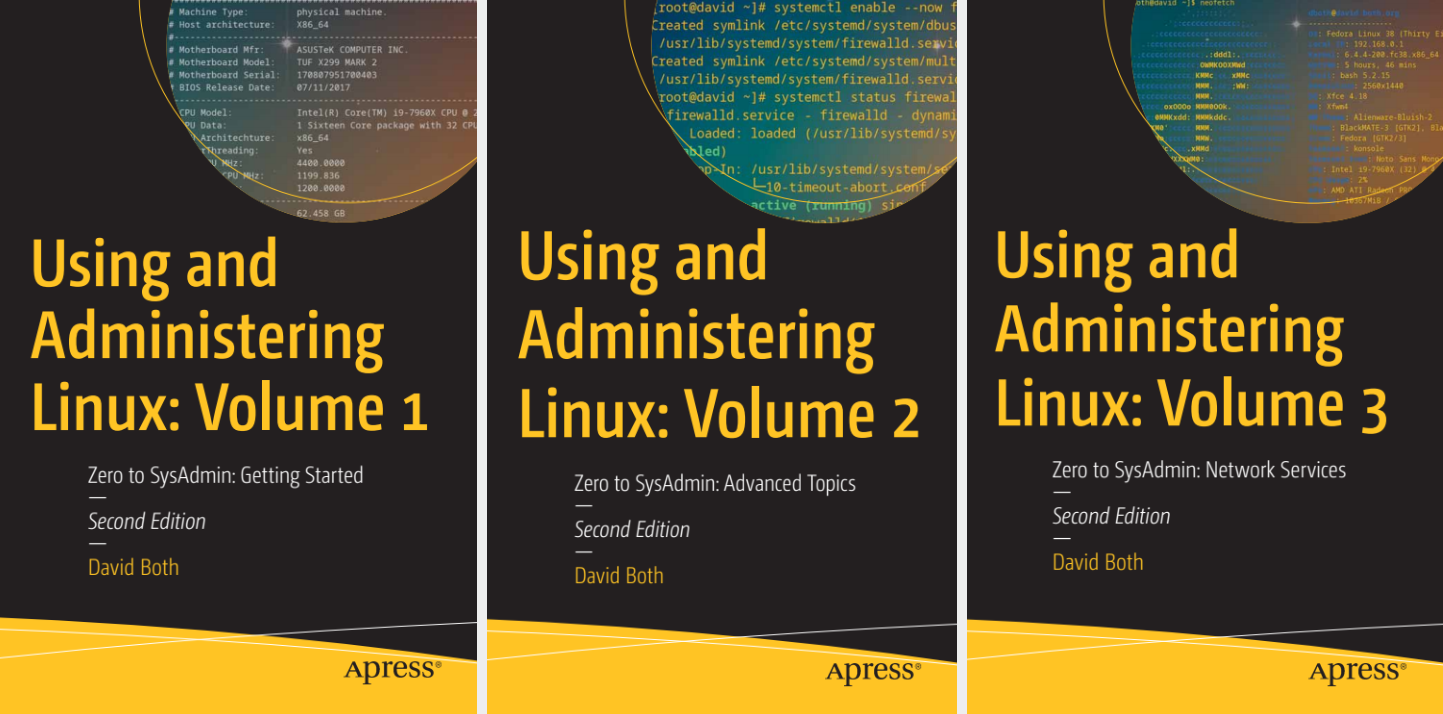
I’ve just signed the contracts for the 3rd Edition of my “Using and Administering Linux“ series of books, that together provide a complete self-study course for anyone who wants to learn to be a Linux System Administrator.
The series consists of three books with the subtitles:
- Zero to SysAdmin: Getting Started — which introduces you to Linux and the Linux Philosophy for SysAdmins, then shows you how to create a virtual network and a Virtual Machine on which to install Linux. You’ll learn how to use the Xfce desktop, and then dive deep into the command line (the shell). You’ll learn about text editors and how to modify configuration files. You’ll also learn to work as root and install updates and new software. You’ll learn some advanced terminal and shell skills. Finally you’ll dive into all things about files, filesystems, and logical volume management.
- Zero to SysAdmin: Advanced Topics — which starts with processes and how to manage them. You’ll learn how to use regular expressions to create highly targeted searches for files and documents as well as their contents. This volume shows you how to install and use printers. It also introduces you to command line programming, saving those command line programs into shell scripts, and other tools for automating SysAdmin tasks. You’ll also learn why systemd is a powerful tool for SysAdmins and how to use it to manage many aspects of a modern, running Linux computer. You’ll explore networking and a number of tools you can use to manage and monitor network communications. You’ll also find out why the BtrFS filesystem has some powerful features but is not appropriate except in a few environments. The course then takes you to using D-Bus and udev, how to use traditional logs, how to manage users, and using the firewall to maintain a secure system in a connected world.
- Zero to SysAdmin: Network Services — which starts by having you create a new VM that will be used as a server in the virtual network. You’ll then learn to create and configure the servers that are used to manage a network such as DNS, SSH, DHCP, and more. You’s also learn to install email, mailing list, and web servers, as well as how to combat spam. Then you’ll learn to use remote desktop access, how to create RPM files, and tools to share data between computers.
This 3rd Edition will also incorporate corrections based on the errata I’ve collected from the 2nd Edition, fix some typographical errors, rewording to clarify some topics, and provide better coverage of some topics. It will also contain significant changes that will simplify the installation of Linux and make creating a customized system easier to accomplish.
As I’m still early in the process, some aspects of this new edition are still unsettled. I’ll post more information here as it becomes available.
Yes, I know the covers in the lead image are of the 2nd Edition, but the ones for the 3rd Edition haven’t been created yet.

 Don Watkins

 Jim Hall