Skip to content

Both.org

News, Opinion, Tutorials, and Community for Linux Users and SysAdmins

Primary Menu
  • About Us
  • Computers 101
    • Hardware 101
    • Operating Systems 101
  • End of 10 Events
    • Wake Forest, NC, — 2025-09-20
  • Linux
    • Why I use Linux
    • The real reason we use Linux
  • My Linux Books
    • systemd for Linux SysAdmins
    • Using and Administering Linux – Zero to SysAdmin: 2nd Edition
    • The Linux Philosophy for SysAdmins
    • Linux for Small Business Owners
    • Errata
      • Errata for The Linux Philosophy for SysAdmins
      • Errata for Using and Administering Linux — 1st Edition
      • Errata for Using and Administering Linux — 2nd Edition
  • Open Source Resources
    • What is Open Source?
    • What is Linux?
    • What is Open Source Software?
    • The Open Source Way
  • Write for us
    • Submission and Style guide
    • Advertising statement
  • Downloads
  • Home
  • Seven Linux commands just for fun
  • Command Line
  • Fun
  • Linux

Seven Linux commands just for fun

Linux was developed by fun-loving people who created an array of fun and even comical commands. Try playing around with these yourself when you want a smile.
Don Watkins April 28, 2024 4 minutes read
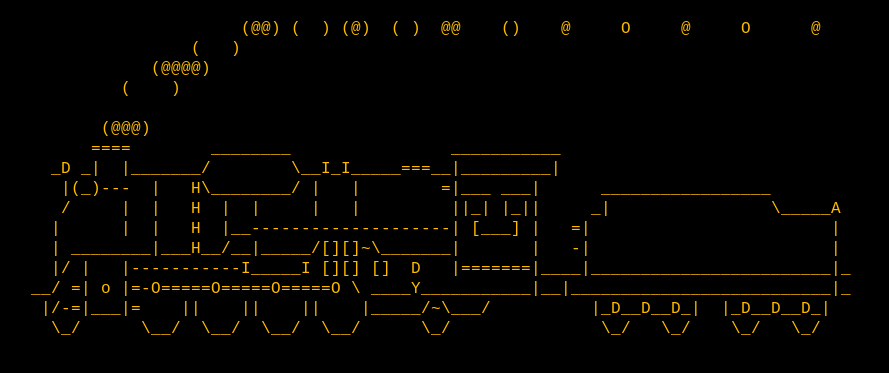
ASCII drawing of a steam locomotive.

The Linux command line can be the home of power users and sysadmins. However, Linux is more than just a lot of hard work. Linux was developed by fun-loving people who created an array of fun and even comical commands. Try playing around with these yourself when you want a smile.

Steam locomotive (sl)

For no reason whatsoever, you can cause a steam locomotive to zip across your terminal using the sl command. Install Steam Locomotive with your package manager. For example, on Fedora:

$ sudo dnf install sl
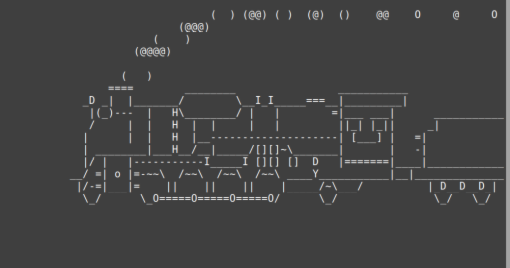
A steam locomotive engine drawing made from symbols and characters

Real uses

As far as I know, the sl command is truly just for fun. Do you have an interesting use for sl?

Fireplace (aafire)

Warm your heart and your terminal with aafire command, which causes a fireplace animation to play. You can install aafire with your package manager. On Debian, Mint, Elementary, and similar:

$ sudo apt install libaa-bin

On Fedora, CentOS, and others:

$ sudo dnf install aalib
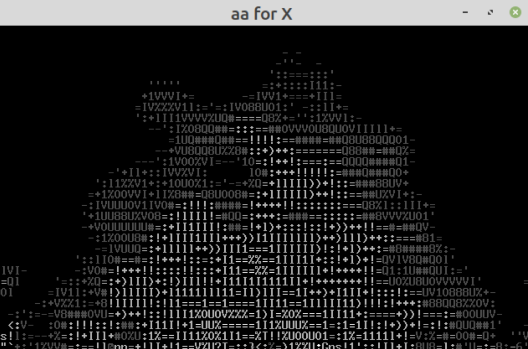
A black and white image of a fire made from text symbols and characters

Real uses

This image is a subtle way to communicate to your team or boss that everything’s about to go up in smoke.

Yes

You can use the yes command to print out a string of text until it is forcibly stopped with Ctrl+C. For example, I am a Buffalo Bills fan, so I chose to print out an endless series of Buffalo Bills with the yes command:

$ yes Buffalo Bills
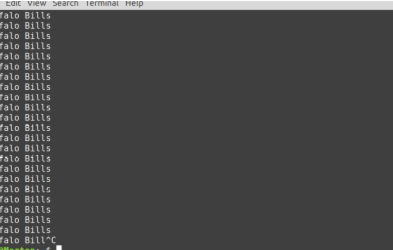
A screenshot showing repeated lines of Buffalo Bills left edge slightly cut off

Real uses

You can use this command to pipe confirmation to scripts so that when a script pauses to ask for confirmation, it automatically receives yes. For example, imagine there’s a script you run that often stops to ask you for confirmation:

$ foo
Are you sure you want to do this? Y/n  Y
Are you really sure? y/N  Y
But are you really? y/N

You can auto-accept such messages by passing yes to the command:

$ yes | foo

Alternatively, you can auto-deny messages using yes as well:

$ yes no | foo

Fortune

Installing Fortune can tell your fortune on the command line. Fortune prints a random and possibly meaningful message.

Install Fortune with your package manager:

$ sudo apt install fortune

On Fedora:

$ sudo dnf install fortune-mod

The fortune command has many datasets it can draw from. For instance, you can get famous quotes from literature or the science-fiction TV show Firefly, or choose from jokes, tips about Linux, and much more. Search your repository for “fortune” to see what options your distribution provides.

$ fortune
Johnson's law:
  Systems resemble the organizations that create them.

Real uses

You can use Fortune to generate a pseudo-random number. There’s not enough entropy to make it cryptographically secure, but when you need an unexpected number, you can count characters or words:

$ fortune | wc --chars
38
$ fortune | wc --words
8
$ fortune | wc --chars
169

Lolcat

Lolcat is a program that concatenates files, or standard input, to standard output (like the generic cat) and adds rainbow coloring to it. You can pipe the output of other commands to lolcat, which provides a rainbow hue to the result.

Here’s the result of lolcat -h for its help output:
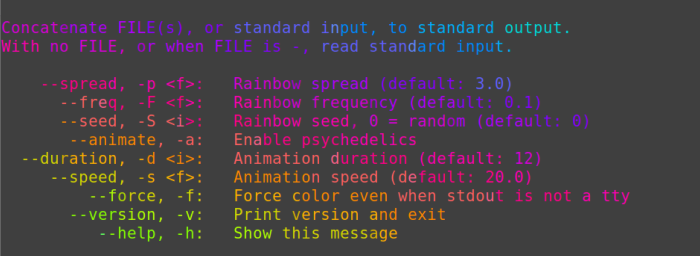
onscreen text colored in a rainbow gradient

Figlet and banner

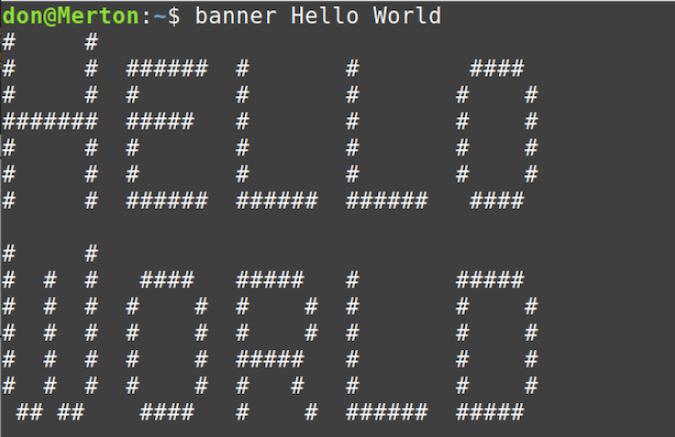
The figlet and banner commands let you create simple ASCII text banners. Here’s a text banner for a CentOS system:

$ figlet centos.com
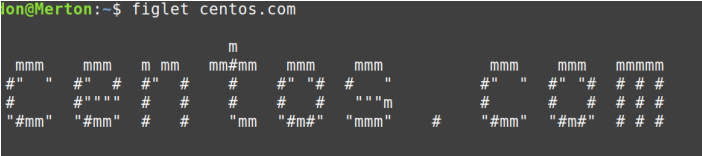
Text banner reading "centoscom" composed from symbols and characters

Pipe figlet to lolcat for a colorful banner:

$ figlet centos.com | lolcat
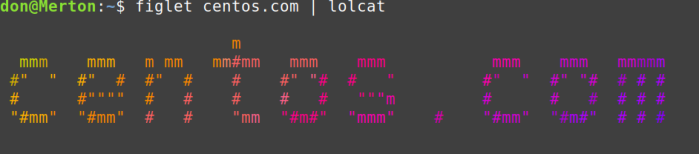
A text banner reading "centoscom" made rainbow colored with lolcat

$ banner Hello World

A banner reading "Hello World" spelled out with pound symbols

Real use

Both figlet and banner are easy ways to remind users what system they’re logging on to, which can be helpful when you work with dozens of servers, as many sysadmins, web designers, and cloud developers do.

Espeak

You can add speech capabilities to your command line funnies by installing espeak.

Once espeak is installed, turn up the volume on your computer and have some fun listening to your machine talk to you. Espeak is a software speech synthesizer, and there are a few different voice libraries available.

$ espeak "Linux is the best operating system."

Fun commands

Be sure to consult the man pages of all these commands to explore all the possibilities and iterations.
Tags: Fun Linux Commands

Post navigation

Previous: Extend the life of your Linux SSD drive with fstrim
Next: 3 things that matter most for a project management tool

Related Stories

connections_wires_sysadmin_cable
  • Linux
  • Networking
  • Router

How to Make your Linux Box Into a Router

David Both April 29, 2026
f44-01-day-cropped
  • Fedora
  • Linux
  • Upgrades

Fedora 44 Released

David Both April 28, 2026
command_line_prompt
  • Command Line
  • Linux
  • Programming

Writing a replacement seq command

Jim Hall April 27, 2026

System upgrades this Sunday, May 3

Tools illustrationFedora 44 was released this week and I’ve upgraded all my systems except for the two that directly affect Both.org. I’ll be upgrading the hosts for my server and firewall to Fedora 44 this Sunday afternoon, May 3.

Both.org will be down for most of the afternoon for these upgrades.

Thanks for your patience.

Random Quote

A carelessly planned project takes three times longer to complete than expected; a carefully planned project takes only twice as long.

— Laws of computerdom according to Golub

Why I’ve Never Used Windows

On February 12 I gave a presentation at the Triangle Linux Users Group (TriLUG) about why I use Linux and why I’ve never used Windows.

Here’s the link to the video: https://www.youtube.com/live/uCK_haOXPFM 

Why there’s no such thing as AI

Last October at All Things Open (ATO) I was interviewed by Jason Hibbits of We Love Open Source. It’s posted in the article “Why today’s AI isn’t intelligent (yet)“.

Technically We Write — Our Partner Site

Our partner site, Technically We Write, has published a number of articles from several contributors to Both.org. Check them out.

Technically We Write is a community of technical writers, technical editors, copyeditors, web content writers, and all other roles in technical communication.

Subscribe to Both.org

To comment on articles, you must have an account.

Send your desired user ID, first and last name, and an email address for login (this must be the same email address used to register) to subscribe@both.org with “Subscribe” as the subject line.

You’ll receive a confirmation of your subscription with your initial password as soon as we are able to process it.

Administration

  • Log in
  • Entries feed
  • Comments feed
  • WordPress.org

License and AI Statements

Both.org aims to publish everything under a Creative Commons Attribution ShareAlike license. Some items may be published under a different license. You are responsible to verify permissions before reusing content from this website.

The opinions expressed are those of the individual authors, not Both.org.

You may not use this content to train AI.


Advertising Statement

Both.org does not sell advertising on this website.


Advertising may keep most websites running—but at Both.org, we’re committed to keeping our corner of the web ad-free. Both.org does not sell advertising on the website. Nor do we offer sponsored articles at this time. We’ll update this page if our position on sponsorships changes.

We want to be open about how the website is funded. Both.org is supported entirely by David Both and a few other dedicated individuals.


Copyright © All rights reserved. | MoreNews by AF themes.