Skip to content

Both.org

News, Opinion, Tutorials, and Community for Linux Users and SysAdmins

Primary Menu
  • About Us
  • Computers 101
    • Hardware 101
    • Operating Systems 101
  • End of 10 Events
    • Wake Forest, NC, — 2025-09-20
  • Linux
    • Why I use Linux
    • The real reason we use Linux
  • My Linux Books
    • systemd for Linux SysAdmins
    • Using and Administering Linux – Zero to SysAdmin: 2nd Edition
    • The Linux Philosophy for SysAdmins
    • Linux for Small Business Owners
    • Errata
      • Errata for The Linux Philosophy for SysAdmins
      • Errata for Using and Administering Linux — 1st Edition
      • Errata for Using and Administering Linux — 2nd Edition
  • Open Source Resources
    • What is Open Source?
    • What is Linux?
    • What is Open Source Software?
    • The Open Source Way
  • Write for us
    • Submission and Style guide
    • Advertising statement
  • Downloads
  • Home
  • Protecting Your Privacy: Removing Exif Metadata from Your Digital Images with ExifCleaner
  • Digital Images
  • Linux
  • Privacy

Protecting Your Privacy: Removing Exif Metadata from Your Digital Images with ExifCleaner

Each picture you take with a digital camera contains numerous tags that provide a great deal of information, some of which might ordinarily be considered confidential.
Don Watkins March 5, 2024 3 minutes read
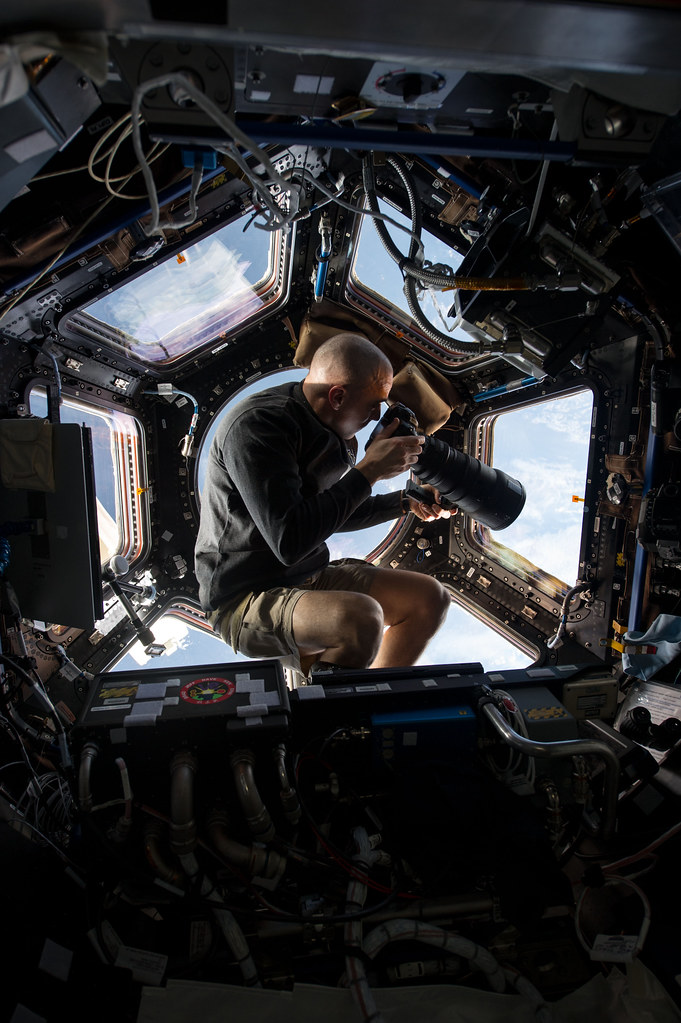
The Ulitimage Photo Shoot Location - Targeting Earth Photographs From Orbit

<a href="https://www.flickr.com/photos/24662369@N07/9006412051" rel="nofollow">The Ulitimage Photo Shoot Location - Targeting Earth Photographs From Orbit</a> by <a href="https://www.flickr.com/photos/24662369@N07" rel="nofollow">NASA Goddard Photo and Video</a> is licensed under <a href="https://creativecommons.org/licenses/by/2.0/" rel="nofollow">CC-BY 2.0</a>

These days, nearly everyone has a digital camera. Cameras are an integral part of smartphones and laptops. If you’re interacting with consumer electronics, you probably have a digital camera available.

Accordingly, billions of digital images are on the internet from various devices and sources. Each image from a digital camera has Exchangeable image file format (Exif) metadata embedded into it. Exif data provides information about where and when the picture was taken, the camera used to produce the image, the file size, MIME type, color space, and much more.

Each picture you take with a digital camera contains numerous tags that provide a great deal of information, some of which might ordinarily be considered confidential.

Major social media platforms maintain that they remove this metadata to protect users from cybercrime. That is not the case for folks who have their own blogs and wikis and are posting pictures of loved ones, family gatherings, and classrooms. A person could download an image from a site and gain access to damaging personal information stored in the metadata.

View Exif data

How can you know what metadata is included in the images you share, and how can you remove it? Recently, I came across an open source project named ExifCleaner. ExifCleaner is a cross-platform open-source tool that easily removes all Exif metadata from images, videos, PDFs, and other types of files.

Install ExifCleaner

ExifCleaner is released under the MIT license. It’s easy to use and install. Download and install the AppImage, deb, or rpm file on your Linux system. For macOS and Windows, download the macOS installer or the Windows installer.

Use ExifCleaner

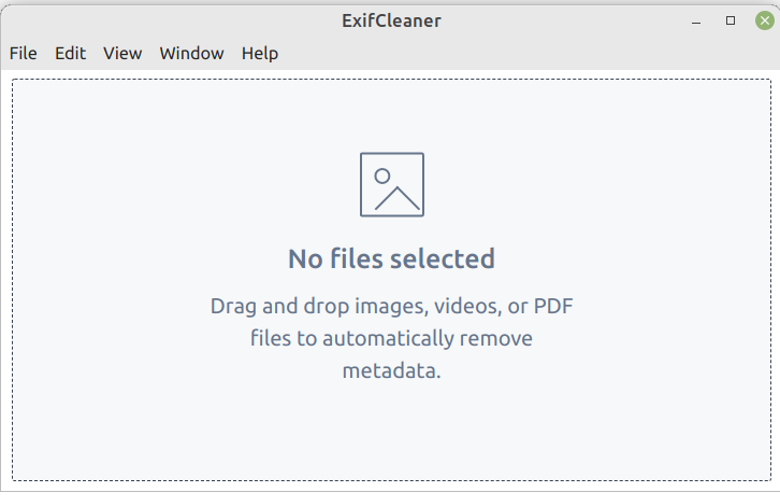
Once installed, launch the graphical application.
exif image metadata cleaner
Image by: (Don Watkins, CC BY-SA 4.0)

You can drag and drop an image into the window or use Open from the File menu to load an image. You can load multiple images at once.

Once loaded, ExifCleaner clears all metadata instantly. There’s no further action required, but there’s also no confirmation or warning. Only open files in ExifCleaner that you want to scrub metadata from.
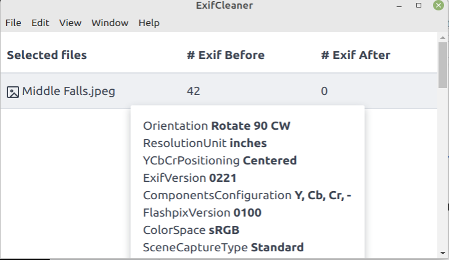
image metadata viewed in exif cleaner
Image by: (Don Watkins, CC BY-SA 4.0)

ExifCleaner works on dozens of file types, including JPG, 3G2, 3GP2, AAX, CR2, MOV, PDF, PNG, and many more.

Try ExifCleaner

ExifCleaner is available in twenty-four different languages and has a large development community. If you are interested in contributing to the project’s development, contact the team and check out the source code. Learn more about ExifCleaner at the official website.
Tags: Exif Privacy Security

Post navigation

Previous: What is a sysadmin?
Next: How to write your first article

Related Stories

connections_wires_sysadmin_cable
  • Linux
  • Networking
  • Router

How to Make your Linux Box Into a Router

David Both April 29, 2026
f44-01-day-cropped
  • Fedora
  • Linux
  • Upgrades

Fedora 44 Released

David Both April 28, 2026
command_line_prompt
  • Command Line
  • Linux
  • Programming

Writing a replacement seq command

Jim Hall April 27, 2026

System upgrades this Sunday, May 3

Tools illustrationFedora 44 was released this week and I’ve upgraded all my systems except for the two that directly affect Both.org. I’ll be upgrading the hosts for my server and firewall to Fedora 44 this Sunday afternoon, May 3.

Both.org will be down for most of the afternoon for these upgrades.

Thanks for your patience.

Random Quote

The fastest algorithm can frequently be replaced by one that is almost as fast and much easier to understand.

— Douglas W. Jones

Why I’ve Never Used Windows

On February 12 I gave a presentation at the Triangle Linux Users Group (TriLUG) about why I use Linux and why I’ve never used Windows.

Here’s the link to the video: https://www.youtube.com/live/uCK_haOXPFM 

Why there’s no such thing as AI

Last October at All Things Open (ATO) I was interviewed by Jason Hibbits of We Love Open Source. It’s posted in the article “Why today’s AI isn’t intelligent (yet)“.

Technically We Write — Our Partner Site

Our partner site, Technically We Write, has published a number of articles from several contributors to Both.org. Check them out.

Technically We Write is a community of technical writers, technical editors, copyeditors, web content writers, and all other roles in technical communication.

Subscribe to Both.org

To comment on articles, you must have an account.

Send your desired user ID, first and last name, and an email address for login (this must be the same email address used to register) to subscribe@both.org with “Subscribe” as the subject line.

You’ll receive a confirmation of your subscription with your initial password as soon as we are able to process it.

Administration

  • Log in
  • Entries feed
  • Comments feed
  • WordPress.org

License and AI Statements

Both.org aims to publish everything under a Creative Commons Attribution ShareAlike license. Some items may be published under a different license. You are responsible to verify permissions before reusing content from this website.

The opinions expressed are those of the individual authors, not Both.org.

You may not use this content to train AI.


Advertising Statement

Both.org does not sell advertising on this website.


Advertising may keep most websites running—but at Both.org, we’re committed to keeping our corner of the web ad-free. Both.org does not sell advertising on the website. Nor do we offer sponsored articles at this time. We’ll update this page if our position on sponsorships changes.

We want to be open about how the website is funded. Both.org is supported entirely by David Both and a few other dedicated individuals.


Copyright © All rights reserved. | MoreNews by AF themes.