Open source runs on non-code contributions
 johnpicozzi
At this 2023’s DrupalCon North America, EPAM Solution Architect John Picozzi presented a talk about the importance of non-code contribution. He talked about how everyone can get involved and why he believes this is an important topic. This article is a text adaptation of John’s talk; find a link below to a video recording of the complete presentation at DrupalCon.
What is non-code contribution? I asked Google this question and got the following answer: “Any contribution that helps an open source project that does not involve writing code.” Thanks, Google, but I already figured that out. If you asked me to dig deeper, I’d say it’s about providing your time, skills, and resources to benefit a project.
Who is an open source contributor?
Early on, “contribution” implied writing code. Originally, Drupal’s model was “Built by developers, for developers.” Over the years, however, the Drupal community has shifted away from that mindset. Our community has learned to value non-code contributions just as much as code: Any contribution is contribution.
Open source is built in meetups, camps, and cons; it’s built-in and by the community. In fact, most of the contributions at those events have very little to do with coding. To have those events, you need attendees, speakers, trainers, and organizers. Don’t get me wrong: Of course, open source communities still need people who write code, but that’s not the only thing they need. If you participate in the community and share ideas, ask questions, or provide help—congratulations, you’re already contributing!
Is contributor a self-designation (“I’m a contributor”) or a community designation (“We say you’re a contributor”)? It’s safe to say that everyone is a contributor: conference attendees, designers who create UI and module logos, marketing folks who help market modules or events, and many more. Don’t wait for someone else to give you that designation. You can get involved and feel confident telling others you’re a contributor.
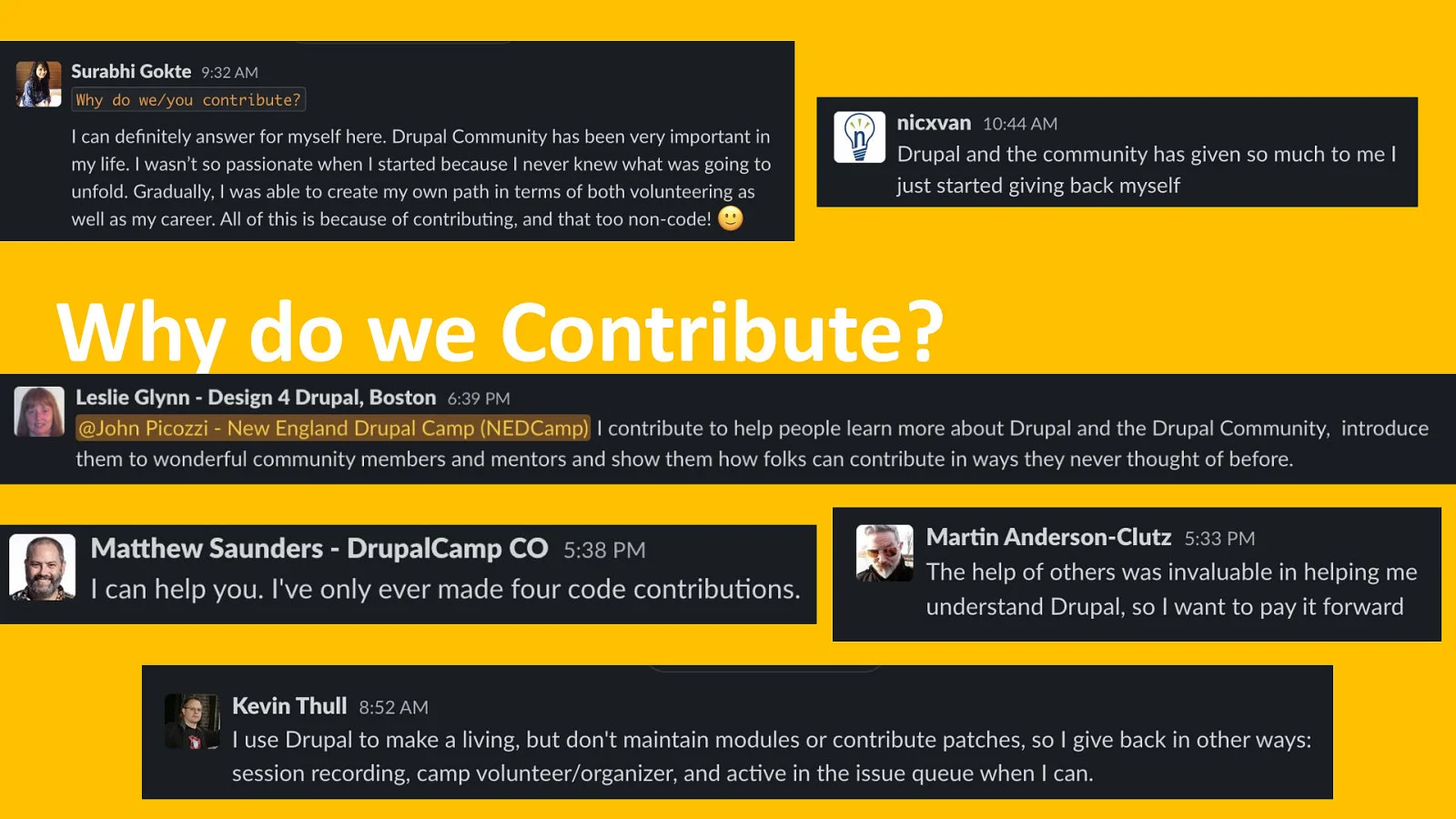
There are many ways to motivate someone (or yourself) to contribute. Money is not always the top motivator. However, sometimes contribution can be paid work. Many people contribute simply because they want to give back to the community.
Everyone would probably give a different answer from their peers when asked why they contribute, but here are some of the most common responses:
- It makes you feel good
- Building and improving skills
- Career development
- Making connections/networking
The list is endless and as varied as the contributors themselves. Each contributor has their own reasons, and there are no right or wrong answers.
Why non-code contribution is important to open source
Non-code contribution is as valuable to the health of a project as writing code. It helps to get more people with a wide variety of skills involved in the community. Everyone has something to offer and a unique skill set to share.
There are non-code requirements for all projects, and not everyone is a developer or coder. Moreover, different points of view need to be represented. For example a marketing person will likely have different experiences and perspectives than a developer. Every effort moves open source forward in some way—that’s why non-code contribution is essential.
Common challenges
This definition of contribution may make it sound very simple: Just share your knowledge, express your thoughts, and help the community. However, contributors face several challenges. One of the most common is imposter syndrome. Less experienced contributors may worry that their contribution isn’t valuable or helpful. You can combat that feeling by focusing on your specific skills and passions. For example, if you have event organizing experience, you can lean into that and focus on organizing and helping with those activities.
To combat these negative thoughts, make contributing a positive experience. Work/life/contribution balance is important. Contribution should be enjoyable, not just another job. If you can, implement contribution into your work. Many employers encourage and benefit from your contribution, and it’s possible to build a career based on contribution.
Don’t burn out and contribute nonstop during nights and weekends. Just add 30 minutes to the start or end of your day, or incorporate contribution into your regular workday if possible.
How to make your first non-code contribution
At this point in the article, I hope you’re thinking, “OK, I’m ready. What do I do?” How do you get involved? Just do it! You only need to get started: For example, to start contributing in the Drupal community, ask in the issue queue or Drupal chat or reach out to camp organizers for recommendations. A whole community is waiting to support you.
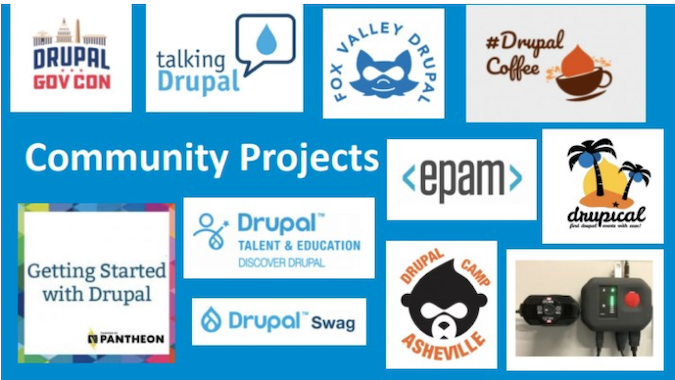
Remember to follow your skills and interests. You have them, so use them to inspire your contributions. Your interests may differ from your skills: You could decide to contribute to something you have little experience with but always wanted to know more about. Simply talk to people, share knowledge, ask questions, go to a camp or a meetup, and contribute.
I want to close with a quote by Margaret Mead (an American anthropologist) that perfectly describes open source contribution to me: “Never doubt that a small group of thoughtful, committed citizens can change the world. Indeed, it is the only thing that ever has.” Dr. Mead doesn’t say “a small group of code writers or developers.” She says a thoughtful, committed group of citizens—citizens with great passion and many different skills. That’s what powers open source, and that’s what powers Drupal.
Watch the talk on YouTube.
 Jim Hall

 Seth Kenlon