Drupal 10 is worth a fresh look
 mandclu
Drupal 10 is chock-full of useful features, a fresh look, and a brand-new editor.
The popular Drupal open source content management system (CMS) reaches a significant milestone when version 10 is released on December 14. Personally, I think Drupal X sounds way cooler, but so far, my calls to name it that haven’t gotten much traction. I enlisted the help of my friend Aaron Judd of Northern Commerce to give us a sense of how cool Drupal X could look:

What’s a Drupal, anyway?
Drupal is an open source CMS and development framework. While other CMS options focus on simple long-form content (think blogs) or entirely free-form content (like in Wix or Squarespace), Drupal has made a name for itself in handling more complex content architectures, in multiple languages, with robust content governance. Drupal sites (like this site, Opensource.com!) benefit from a strong role-based access control (RBAC) system, unlimited custom roles and workflows, and a powerful and extensible media library.
Here’s a rundown for anyone who hasn’t kept tabs on what’s coming in the newest major version.
A fresh face
Most Drupal sites use custom themes to give them a unique look and feel. Still, the initial experience you have when installing a CMS matters. In Drupal, themes define the look and feel of a site, and you can use different themes for public and administrative experiences. Until recently, the Bartik and Seven themes had been the default face of Drupal for more than a decade. To put that in context, when Bartik was released, the most popular browser in the world was Internet Explorer 8. A lot has changed since then, particularly around best practices for building websites.
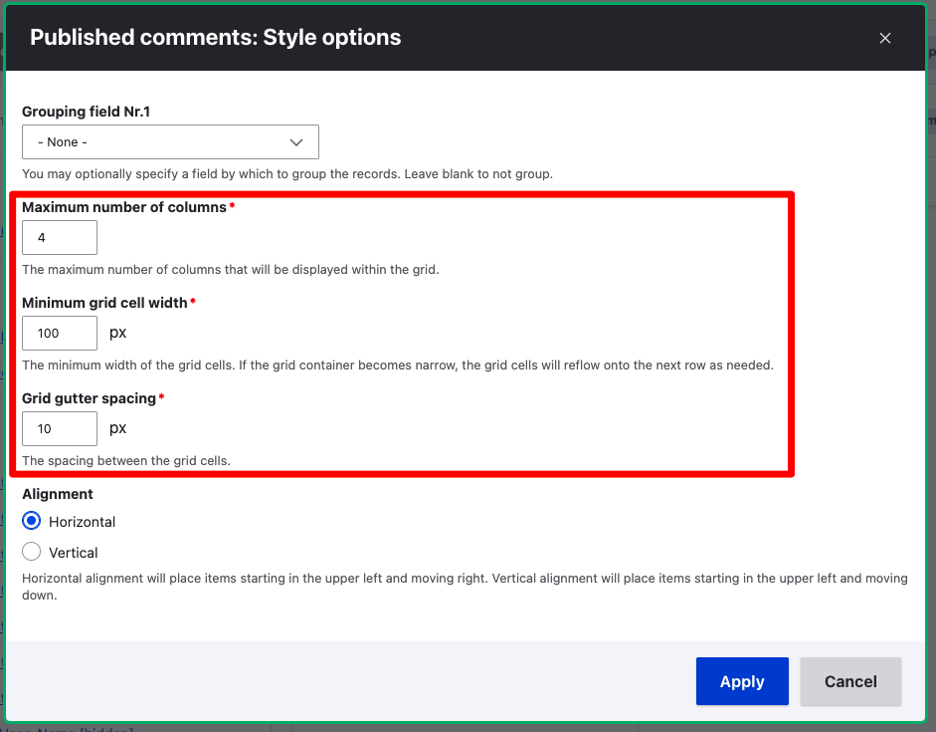
In fact, a significant change in Drupal 10 will be the removal of support for Internet Explorer (IE), which is itself no longer supported by Microsoft and hasn’t seen major updates since 2013. That may not sound like an improvement, but continued support for IE kept the community from adopting modern markup and styling. For example, thanks to being unencumbered by support for legacy browsers, Drupal 10 includes a new responsive grid layout that’s so innovative it got a writeup in CSS Tricks.
The new faces of Drupal are two brand new themes: Olivero for visitors and Claro for admins. In addition to being fresh and modern designs, both were developed with accessibility as a top priority.
Improvements under the hood
More than a decade ago, the Drupal community decided to “Get Off the Drupal Island.” That meant adopting solutions shared across popular projects and frameworks instead of ones developed and maintained exclusively by the Drupal community. Today Drupal leverages a variety of projects and libraries whose names will be familiar to open source developers who have never touched Drupal: Symfony, Composer, CKEditor, Twig, Nightwatch, and more.
That has brought a variety of powerful capabilities to Drupal and allowed it to contribute back to those solutions, benefitting a broader set of developers. It has also become a determining factor for the cadence of Drupal’s major version releases.
To illustrate, consider that Drupal 7 was released in early 2011. Drupal 8 was released almost five years later, towards the end of 2015. Drupal 9 was released in June of 2020, with a key motivator being the move to supported versions of underlying dependencies and removing deprecated code. And now, roughly two and half years later, we’re already planning to release Drupal 10. This new major version will leverage updated versions of PHP, Symfony, and Composer, among others.
An all-new editor
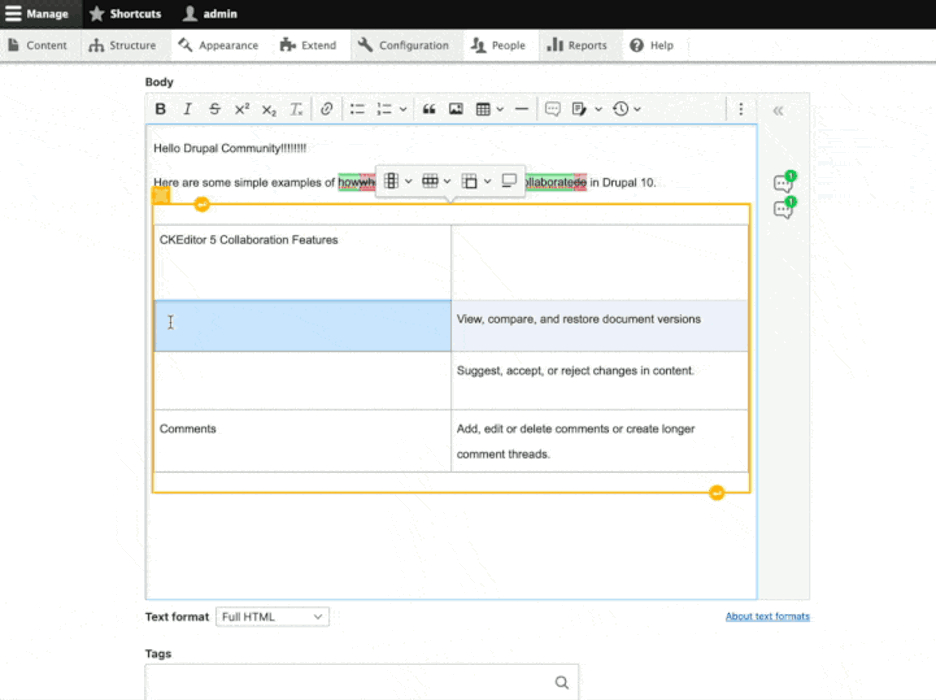
An upgrade of particular note is the move to CKEditor 5. Although notionally an incremental update, under the hood CKEditor 5 was completely rewritten, much the same as the transition from Drupal 7 to 8. In addition to a sleeker interface, CKEditor 5 has the potential for exciting new capabilities, such as real-time collaboration. Drupal’s CKEditor integration for version 5 has already been augmented with a number of UI enhancements. For example, media placed within content can be configured using an overlaid toolbar ribbon instead of needing to launch a modal dialog to access these settings. Also, the styles dropdown now includes a preview of each type available.
A look ahead
Earlier in 2022, Drupal creator and project lead Dries Buytaert announced a focus on “ambitious site builders.” This means that while the community will continue to work on making the developer experience better in general, moving forward there is a particular focus on making it easier to create engaging experiences in Drupal without having to write code or use command-line tools. Three strategic initiatives embody this new focus: Automatic Updates, the Project Browser, and Recipes.
Automatic Updates will reduce the total cost of ownership for Drupal sites and help them be more secure by ensuring they always have the latest core security patches. This will be a major benefit for site owners and Drupal development teams everywhere. However, judging by personal experience, Wednesday night pizza sales may take a hit (traditionally, the Drupal security team releases updates on the third Wednesday of the month). There is now a stable release of Automatic Updates as a contrib module. Work has begun to move this into Drupal core, so all Drupal sites will eventually be able to leverage this capability.
The Project Browser makes Drupal sites easier to build, maintain, and evolve by allowing site builders to search and browse through a subset of Drupal’s vast catalog of available modules, prefiltered to the site’s Drupal version, for security, stability, and more. A site builder can select, download, and install a module without leaving the site’s web interface. In fact, there’s an “app store” like interface meant to promote the most popular modules available that are compatible with the current site’s version of Drupal. While other CMS options have had similar offerings, this advancement means you don’t need to sacrifice ease-of-use to take advantage of the power of Drupal. Also, all of the thousands of modules listed are 100% free.
For many years Drupal has had a concept of distributions. These are opinionated versions of Drupal designed to meet specific use cases such as media publishing, fundraising, intranet portals, and more. While distributions have proven an excellent way to accelerate initial development, in practice, they have been known to require significant work to maintain and create extra work for site owners during maintenance. The Recipes initiative aims to make more granular, composable functionality available when building a site. Want to add a staff directory, events calendar, or locations map to your site? In the future, this will be as easy as installing a recipe and then customizing it to meet your site’s specific needs.
It’s an exciting time to try Drupal
Drupal 10 is the culmination of work contributed by thousands of dedicated and talented community members worldwide. If you’re not already using Drupal, we hope you’ll try it out for your next project. There’s a common saying among Drupalists: “Come for the code, stay for the community.”


 johnpicozzi